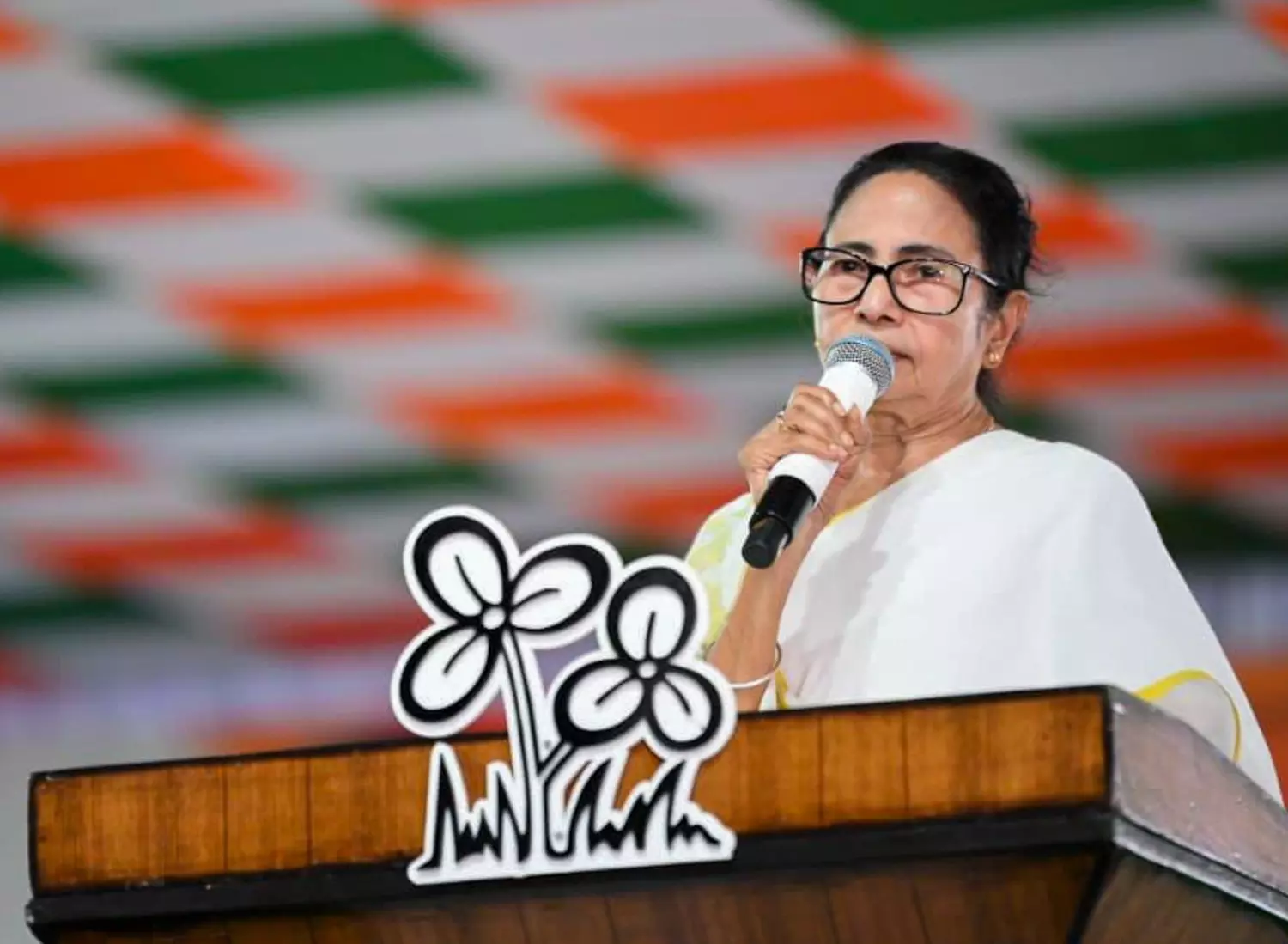
New Delhi: With the Election Commission of India announcing assembly election dates for five states—West Bengal, Tamil Nadu, Kerala, Assam, and Puducherry—political activity has intensified across the country. While each state presents its own dynamics, West Bengal has clearly emerged as the focal point of this multi-state electoral contest.
The spotlight on Bengal stems from the high-stakes battle between the ruling All India Trinamool Congress, led by Chief Minister Mamata Banerjee, and the Bharatiya Janata Party, which is aggressively pushing for a सत्ता परिवर्तन in the state. Having come to power in 2011 by ending decades of Left rule, Banerjee now faces a crucial electoral test after nearly 15 years in office.

Political analysts suggest that anti-incumbency could play a significant role, as prolonged governance often leads to public fatigue. The BJP, which has significantly expanded its presence in Bengal over the past decade, is positioning itself as the principal challenger. Its strong performance in the 2019 Lok Sabha elections and the 2021 Assembly polls has bolstered its confidence heading into this electiion.
A major point of contention in the campaign is the issue of illegal infiltration from neighboring Bangladesh, which the BJP has framed as a matter of national security and demographic concern. Senior BJP leader Amit Shah has repeatedly questioned why border infiltration is allegedly more prevalent in Bengal compared to other border states. The party has also linked the issue to incomplete border fencing, accusing the state government of not providing adequate land.
The Trinamool Congress, however, has dismissed these allegations as politically motivated, accusing the BJP of attempting to polarize voters and disrupt Bengal’s social harmony. The debate has added a sharp national dimension to what would otherwise be a state-focused electoral contest.
Another major controversy shaping the political discourse is the intensive revision of electoral rolls. The issue has triggered a direct confrontation between the state government and the Election Commission, with Mamata Banerjee raising concerns over potential threats to voter rights and Bengali identity. The matter has even reached the Supreme Court of India, highlighting its seriousness.

Beyond these issues, governance-related controversies—including alleged recruitment scams and irregularities in public distribution systems—have provided ammunition to the opposition. The BJP has accused the state government of corruption and administrative inefficiency, while the ruling party has rejected these claims as baseless.
Despite the challenges, Mamata Banerjee continues to rely on her strong grassroots connect and welfare schemes targeted at women, rural communities, and economically weaker sections. The Trinamool Congress has positioned itself as the protector of Bengal’s cultural identity, often invoking the theme of “Bengali asmita” in its campaign narrative.
Meanwhile, other states in the poll cycle present their own contests. Tamil Nadu continues to witness traditional Dravidian political rivalries, Kerala sees a direct fight between the Left and Congress-led alliances, Assam remains crucial for the BJP’s regional strategy, and Puducherry’s outcome will hinge on coalition equations. However, none match the political intensity currently seen in West Bengal.
Experts believe the outcome in Bengal could have far-reaching implications for national politics. A strong mandate for Mamata Banerjee could elevate her role as a key opposition figure at the national level, while a BJP victory would mark a significant expansion of its influence in eastern India.
As campaigning gains momentum, all eyes remain on West Bengal—where questions of governance, identity, and national politics converge—making it the decisive arena in this five-state electoral battle.




 ---------------------------------------------------------------------------------------------------